
Slot RTP and Volatility Guide: Understanding Payout Math, Variance, and Hit Rates
Demystifying the Mathematics of Online Video Slots
When exploring the vast catalog of digital slot games on modern platforms like PHOPEN, players are confronted with hundreds of colorful game thumbnails, each advertising unique themes, cascading mechanics, and potential win multipliers. However, beneath the visual animations, celebratory sound effects, and themed graphics lies an intricate mathematical engine designed by software engineers. Two fundamental statistical metrics govern every single spin you make: Return to Player (RTP) and Volatility (often referred to as variance).
For many casual players in the Philippines, these two terms remain shrouded in confusion or complete misunderstanding. Believing that a 96% RTP guarantees you will walk away with ₱96 after wagering ₱100 in a brief twenty-minute session is one of the most common and costly misconceptions in online gaming. In reality, short-term session outcomes are dominated by statistical volatility, while theoretical RTP only reveals itself across millions of cumulative spins.
Whether you fund your account using GCash or Maya to spin popular JILI titles like Super Ace or high-variance Pragmatic Play slots like Gates of Olympus, understanding the interplay between RTP, volatility index, and hit frequency is the single most valuable skill for managing your bankroll. This comprehensive guide breaks down the mathematical foundations of video slots, analyzes variance profiles, and provides practical frameworks to align your gaming choices with your personal budget.
Technical Overview and Mathematical Foundations
Reviewing the standardized definitions and mathematical formulas associated with slot analytics establishes a clear technical foundation:
| Statistical Metric | Formal Definition | Mathematical Formula | Practical Meaning |
|---|---|---|---|
| Return to Player (RTP) | Theoretical percentage of total wagers returned to players over time. | $\text{RTP} = \frac{\text{Total Payouts Returned}}{\text{Total Wagers Placed}} \times 100$ | Long-term payout efficiency across millions of spins. |
| House Edge | The statistical profit margin retained by the casino operator. | $\text{House Edge} = 100% - \text{RTP}$ | Mathematical advantage ensuring the casino's commercial viability. |
| Volatility (Variance) | The risk profile and distribution curve of payouts. | Statistical standard deviation of payout outcomes | Frequency versus magnitude of winning hits. |
| Hit Frequency | The statistical probability of landing any winning payline on a spin. | $\text{Hit Rate} = \frac{\text{Winning Spins}}{\text{Total Spins Tested}} \times 100$ | Percentage of spins that return a non-zero payout. |
What Is Return to Player (RTP) and How Is It Calculated?
Return to Player (RTP) is the primary metric cited by game developers and testing laboratories to describe the theoretical payout efficiency of a slot machine:
                      ┌───────────────────────────────────┐
                      │    The RTP Calculation Engine     │
                      └─────────────────┬─────────────────┘
                                        │
         ┌──────────────────────────────┼──────────────────────────────┐
         ▼                              ▼                              ▼
┌──────────────────┐          ┌──────────────────┐          ┌──────────────────┐
│ Studio Benchmark │          │ Certified Audit  │          │ Real Player Term │
├──────────────────┤          ├──────────────────┤          ├──────────────────┤
│• 10M to 100M     │          │• BMM Testlabs /  │          │• Short session   │
│  simulated spins │             eCOGRA certified│             is dominated by │
│• Total bets in   │          │• Verifies that   │             variance, not   │
│• Total wins out  │             RNG is fair     │             average RTP     │
└──────────────────┘          └──────────────────┘          └──────────────────┘
The Million-Spin Calculation Standard
A game’s certified RTP is not calculated based on fifty spins, five hundred spins, or even five thousand spins. Accredited international software testing laboratories—such as BMM Testlabs and Gaming Laboratories International (GLI)—simulate 10 million to 100 million automated spins through the game’s Random Number Generator (RNG) code.
If a test simulation processes ₱100,000,000 PHP in total wagers, and the software pays back ₱96,500,000 PHP in total prize money across those 100 million spins, the official certified RTP is published as 96.50%.
The Inverse: The House Edge
Every casino game must retain an economic margin to support server hosting, game development, licensing, and corporate overhead. The mathematical inverse of RTP is the House Edge: $$\text{House Edge} = 100% - 96.50% = 3.50%$$ Over a theoretical infinity of spins, the operator expects to retain ₱3.50 out of every ₱100 wagered. While an individual player can certainly win substantial jackpots during a brief evening session, the mathematical house edge ensures the casino remains profitable across its collective player base.
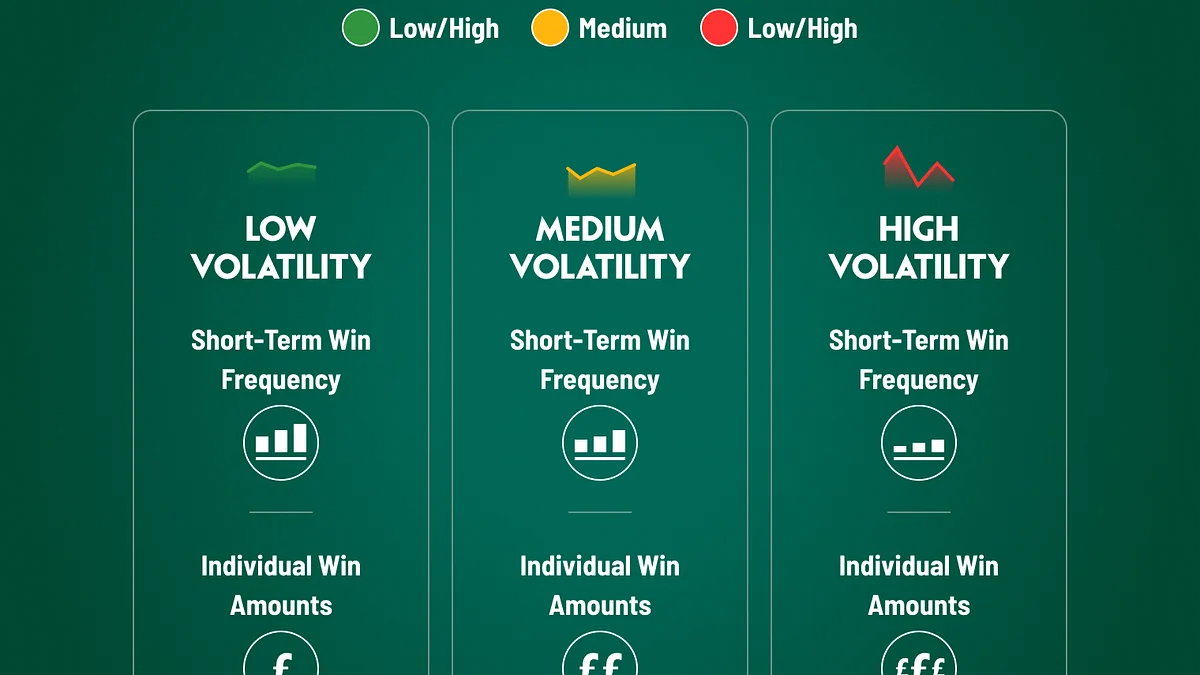
Understanding Volatility (Variance): The Payout Distribution Curve
If two different slot games both advertise an identical 96.00% RTP, does that mean they will feel the same to play? The answer is an emphatic no. The factor that dictates how a game actually feels in your hands is its volatility profile.
                      ┌───────────────────────────────────┐
                      │    The Slot Volatility Spectrum   │
                      └─────────────────┬─────────────────┘
                                        │
         ┌──────────────────────────────┼──────────────────────────────┐
         ▼                              ▼                              ▼
┌──────────────────┐          ┌──────────────────┐          ┌──────────────────┐
│ Low Volatility   │          │ Medium Volatility│          │ High Volatility  │
├──────────────────┤          ├──────────────────┤          ├──────────────────┤
│• Frequent hits   │          │• Balanced hits   │          │• Rare hits       │
│• Small payouts   │          │• Moderate swings │          │• Huge jackpots   │
│• Bankroll safe   │          │• Steady sessions │          │• High risk       │
│• e.g. Starburst  │          │• e.g. Super Ace  │          │• e.g. Olympus    │
└──────────────────┘          └──────────────────┘          └──────────────────┘
Low Volatility Slots
- Payout Characteristics: Frequent winning spins (high hit rate, typically 30% to 40%), but individual payouts are modest—often returning 0.5x, 1x, or 3x your wager.
- Bankroll Impact: Gentle on your wallet. Your balance stays relatively flat, with small wins continuously offsetting small losses.
- Best Suited For: Beginners, casual players with modest budgets (₱200–₱300), and players working to satisfy promotional bonus wagering turnover requirements.
Medium Volatility Slots
- Payout Characteristics: Balanced distribution. You will experience occasional dry spells, interspersed with steady line hits and periodic bonus rounds that pay between 20x and 100x your stake.
- Representative Titles: JILI’s Super Ace and Fortune Gems operate in this sweet spot.
- Best Suited For: Players seeking a blend of session longevity and legitimate jackpot excitement without extreme balance swings.
High and Extreme Volatility Slots
- Payout Characteristics: Low hit frequency (typically 15% to 22%). You can easily experience 15 to 30 consecutive empty spins with zero payouts. However, the game concentrates its payout power into explosive bonus features that can pay 500x, 2,000x, or 5,000x+ your base stake.
- Representative Titles: Pragmatic Play’s Gates of Olympus, Sweet Bonanza, and JILI’s Crazy 777.
- Best Suited For: Experienced players with substantial bankroll cushions who are willing to absorb extended downswings in pursuit of top-tier multiplier caps.
Hit Frequency vs. Payout Magnitude: The Core Trade-Off
A common trap for new players is conflating Hit Frequency with profitability:
The Illusion of "Winning"
Many modern multi-line video slots celebrate a "win" with flashing lights and celebratory audio fanfare even when the payout is less than your initial stake. For example, if you wager ₱10.00 on a 20-line slot and land a three-card connection that pays ₱4.00, your screen displays a winning animation. In reality, you suffered a net loss of ₱6.00 on that spin. This phenomenon is known as a Loss Disguised as a Win (LDW).
Evaluating True Hit Rate
When evaluating a slot, distinguish between:
- Gross Hit Rate: The percentage of spins that produce any payout whatsoever (including LDWs).
- Net-Positive Hit Rate: The percentage of spins that return an amount equal to or greater than your original wager. High-volatility games have lower net-positive hit rates, demanding patient capital management.
The Dangerous Fallacy of Short-Term Expectation
Why do players lose money quickly if a slot has a certified 97% RTP? The answer lies in statistical sample size:
                      ┌───────────────────────────────────┐
                      │    Sample Size vs. Reality        │
                      └─────────────────┬─────────────────┘
                                        │
         ┌──────────────────────────────┼──────────────────────────────┐
         ▼                              ▼                              ▼
┌──────────────────┐          ┌──────────────────┐          ┌──────────────────┐
│ 100 Spins        │          │ 10,000 Spins     │          │ 10,000,000 Spins │
├──────────────────┤          ├──────────────────┤          ├──────────────────┤
│• High variance   │          │• Moderate spread │          │• Mathematical    │
│• Actual session  │          │• Trend stabilizes│             truth emerges   │
│  can return 20%  │          │  toward expected │          │• Exactly hits    │
│  or 500%+        │             payout curve    │             certified RTP   │
└──────────────────┘          └──────────────────┘          └──────────────────┘
In a standard one-hour gaming session, a player typically spins the reels between 400 and 800 times. In a statistical model that requires 100 million spins to stabilize, an 800-spin session represents a microscopic fraction of a percent. Over 500 spins, your personal return could easily be 30% (a severe cold streak) or 400% (hitting a major free spin multiplier). Statistical variance completely overrides theoretical RTP in the short term.
Matching Slot Volatility to Your Personal Bankroll
To avoid exhausting your gaming funds prematurely, use this decision framework to align your wager size with game volatility:
| Session Bankroll | Recommended Volatility | Recommended Base Wager | Minimum Spin Buffer |
|---|---|---|---|
| ₱200 to ₱500 PHP | Low to Medium (Fortune Gems, Super Ace) | ₱1.00 to ₱2.00 PHP | 200 to 250 Spins |
| ₱500 to ₱1,500 PHP | Medium to High (Golden Empire, Boxing King) | ₱2.00 to ₱5.00 PHP | 250 to 300 Spins |
| ₱2,000+ PHP | High / Extreme (Gates of Olympus, Crazy 777) | ₱5.00 to ₱10.00 PHP | 300 to 400 Spins |
Always fund your sessions through secure, isolated e-wallets like GCash or Maya, ensuring that non-essential leisure entertainment funds remain strictly separated from essential living expenses.

Frequently Asked Questions
Does a higher RTP mean I am guaranteed to win on a slot?
No. RTP represents a theoretical mathematical average calculated over tens of millions of simulated spins. In an individual playing session of a few hundred spins, random variance dictates outcomes, meaning you can still lose your session balance or win a substantial jackpot.
Can an online casino manually lower a slot's RTP on the fly?
Certified software developers like JILI Games host their software on secure remote servers. Regulated operators compliant with standards overseen by authorities such as the Philippine Amusement and Gaming Corporation cannot manually tamper with or alter RNG code between individual player spins.
What is the difference between variance and volatility in slots?
In the iGaming sector, "volatility" and "variance" are used interchangeably to describe the risk profile of a game—specifically, the balance between how frequently a slot pays out versus the size of those payouts.
Why are low-volatility slots recommended for bonus turnover?
Low-volatility slots produce frequent small-to-moderate wins that help maintain your balance while you generate the high volume of total bets required to clear promotional wagering turnover rules without rapid balance depletion.
Where can I seek advice if I feel my gaming habits are becoming stressful?
If you feel your gaming activity is causing personal, emotional, or financial hardship, please reach out immediately to international support organizations like BeGambleAware and Gambling Therapy for free, confidential guidance.
 STRATEGY GUIDE
8 min read
STRATEGY GUIDE
8 min read
Classic 777 Slots Guide: Retro 3-Reel Mechanics, Fruit Symbols, and Vegas Payouts
In the fast-moving world of online casino entertainment, software studios continually push the envelope with cinematic 3D graphics, cascading Megaw...
 STRATEGY GUIDE
9 min read
STRATEGY GUIDE
9 min read
Boxing King Slot Guide: Knockout Combos, Free Spins, and Championship Multipliers
In the Philippines, boxing is far more than a spectator sport—it is a cherished national passion woven into the cultural identity of the archipelag...
 STRATEGY GUIDE
8 min read
STRATEGY GUIDE
8 min read
Crazy 777 Slot Guide: Single-Payline Action, Special Reel Multipliers, and Volatility Strategy
In an era where modern video slots frequently feature convoluted Megaways mechanics, cascading clusters, and dozens of confusing bonus triggers, Cr...